
Step by step:
Acid- and Heat-Set Cheeses

• Difficulty level: 

• Cow’s milk (goat’s milk or sheep’s milk also works)
• Duration: 1/2 to 1 hour
• Volume: 1 liter of milk yields +/- 150g cheese
• Download the PDF-version

INTRODUCTION
Not all cheeses are created through rennet and long maturation periods. There is a fascinating family of cheeses that owe their existence to a much more direct interplay of acid and heat. By heating and acidifying milk, whey, or cream, the proteins coagulate into fresh, soft cheeses with a distinctly pure character.
Think of Ricotta, skimmed from whey; the resilient Indian Paneer; or the velvety Mascarpone that transforms cream into a dessert-worthy base. Cheeses such as Queso blanco, Requesón, and Farmer’s cheese also belong to this group. They are typically made without ripening, are quick to prepare, and allow the original dairy ingredient to express itself almost unfiltered. It is precisely this simplicity that makes them so appealing: cheeses that invite experimentation, cross culinary borders, and demonstrate how elemental and creative cheesemaking can be. They require very few ingredients — ideal for beginners.
Traditional artisan cheesemakers often (wrongly) look down on them, considering them “dead” cheeses because they involve no fermentation or lactic acid bacteria.
INGREDIENTS
• several liters of milk (or cream, or whey… see recipe)
• vinegar and/or lemon juice, optionally citric acid
• salt
MATERIAL
• large cooking pot (several liters capacity)
• cheese molds with bottom — basket-style molds work very well
• (digital) thermometer
• sieve or skimmer
• cheesecloth
You can order most of these materials in the webshop.
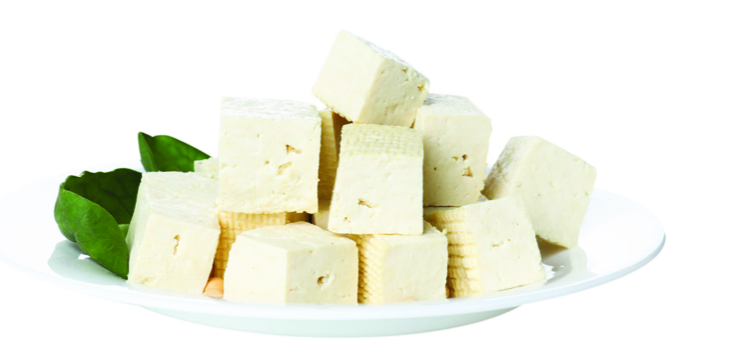
Paneer

Which Cheeses?
Acid-set cheeses are made when acid (lemon juice, citric acid, or vinegar), in combination with heat, causes milk proteins to coagulate. The key difference from most cheeses: no rennet or starter culture is used. The acid lowers the pH of the milk, causing all milk proteins to aggregate into a curd (casein — the primary milk protein — plus the whey proteins albumin and globulin).
The result is cheeses that are fresh-tasting, soft and moist, not aged (or barely aged), and intended for relatively quick consumption. Below are the recipes for:
- Paneer or Farmer’s cheese
- Queso blanco / Queso fresco
- Ricotta (or its Spanish cousin Requesón)
- Mascarpone
1. PANEER
• Origin: India
Characteristics:
• firm but not elastic
• does not melt (ideal for frying or curries)
• mild, milky flavor
Method:
• Heat 3 liters of milk to 91°C (raw or pasteurized milk can be used).
• Hold at this temperature for 5 minutes.
• Remove from heat and, while stirring, slowly add lemon juice or vinegar in a thin stream (or 1 teaspoon citric acid dissolved in 100 ml water) until the whey clearly separates from the curd.
• Stop adding acid when the whey between the curd particles appears yellow-green and relatively clear.
• Let rest for ±15 minutes.
• Transfer the curd into cheesecloth and allow to drain for about 30 minutes.
• Turn the curd mass, fold the corners of the cloth over it, place a plate on top and add a weight.
• Press for 15 minutes (longer for a drier, firmer Paneer).
• If salting, rub the cheese with approximately 1 tablespoon of salt.
• Let rest until the salt is absorbed.
Traditionally, Paneer is eaten immediately. Stored in a sealed container in the refrigerator, it keeps for up to one week.
FARMER’S CHEESE is essentially the same as Paneer, but the curd is simply drained to the desired consistency and optionally mixed with salt. It is not pressed.
2. QUESO BLANCO/QUESO FRESCO
• There is both a fermented version (using lactic acid bacteria) and an acid-set version. The acid-set version does not significantly differ from Farmer’s cheese described above. Salt may be added to taste.

3. RICOTTA/REQUESÓN
Traditionally, Ricotta is made without added milk, whereas Requesón includes a portion of milk. “Matte,” used in Flemish mattentaart pastries, is ricotta made from buttermilk.
Note: adding milk improves yield and reliability.
Ingredients:
• whey (from cheesemaking). Never use whey from washed-curd cheeses (e.g. Gouda, Saint Paulin), as it contains very little residual protein.
• optional: 5–10% milk.
• acid: vinegar, citric acid, or lemon juice.
Method:
• Heat the collected whey to 90°C (albumins denature at 68°C, globulins at 89°C. At 90°C you ensure full denaturation of whey proteins).
• Add a small amount of hot milk (also 90°C) to the hot whey. This improves yield and flocculation due to the casein in the milk. Additional benefit: slightly raises the pH; overly acidic whey reduces yield.
• At 90°C (not earlier), add vinegar gradually. Stir gently — not vigorously — to avoid breaking the flocs. Stop adding acid once a pale yellow-green, almost clear liquid appears between the ricotta flocs.
• Skim off the curd (Ricotta).
• Drain in a sieve or cheesecloth.
• Optional: press (only possible while still hot). Pressed ricotta can be brined (1.5 hours) or dry salted.
Ricotta is a heat-treated cheese and will not melt during cooking. This makes it ideal for pasta dishes such as lasagna, cannelloni, or ravioli.
Pressed Ricotta can be sliced and grilled, cubed for salads, or preserved in (spiced) olive oil flavored with herbs and chili.

4. MASCARPONE
Mascarpone is a sweet cream “cheese” made from acidified cream that is drained to the desired thickness. Tartaric acid is ideal, though white vinegar also works. Mascarpone is essential for tiramisu and for filling cannoli.
Ingredients (for approx. 500 g Mascarpone):
• 1 liter cream, minimum 35% fat, preferably pasteurized (UHT usually works as well)
• 4 tablespoons vinegar or ¼ teaspoon tartaric acid powder dissolved in water
• ¼ teaspoon CaCl2 (calcium chloride), to assist coagulation
Procédé:
• Gently heat the cream + CaCl2 to 90°C.
• Add the acid all at once, whisk quickly and thoroughly, then allow to cool undisturbed to room temperature. The cream will coagulate and separate from the whey.
• Transfer the coagulated cream into a cheesecloth-lined colander. Cover and drain for 12 hours in the refrigerator. The Mascarpone will thicken significantly.
• Once drained, mix well (or blend), transfer to a lidded container, and refrigerate. Keeps for at least one week.
TIP: The authentic Italian method is to store the drained cheese in cheesecloth inside a jar in the refrigerator, allowing any excess moisture to continue draining.
On pH and Acidity
The cheeses described here are all products of the interaction between acid and heat. However, the underlying mechanism differs slightly between them. For the more technically inclined, below are the approximate pH ranges for flocculation.
Note: these are ranges, not exact points. Temperature, calcium balance, and fat content all influence the outcome.
Ricotta (whey + acid + heat)
Proteins: primarily ß-lactoglobulin and α-lactalbumin, with small amounts of residual casein (pure whey) or more casein if milk was added. Start of flocculation: pH 6.0–5.8 - Optimal floc formation: pH 5.6–5.4. This is a relatively high pH. Whey proteins precipitate not only at their isoelectric point, but also through heat denaturation combined with mild acidification.
Paneer, Queso fresco, Farmer’s cheese (milk + acid + heat)
Proteins: primarily casein, with co-precipitated whey proteins. Start of flocculation: pH 5.3–5.1 - Optimal curd formation: pH 4.7–4.6. pH 4.6 = isoelectric point of casein > maximum aggregation.
Mascarpone (cream + acid + heat)
Proteins: casein and whey proteins. However, structure is mainly supported by fat + denatured whey proteins. Casein aggregation plays a secondary role - therefore acid must be dosed carefully. Start of destabilization: pH 6.2–6.0 - Optimal binding: pH 5.8–5.6. Too low a pH will completely break the emulsion.